
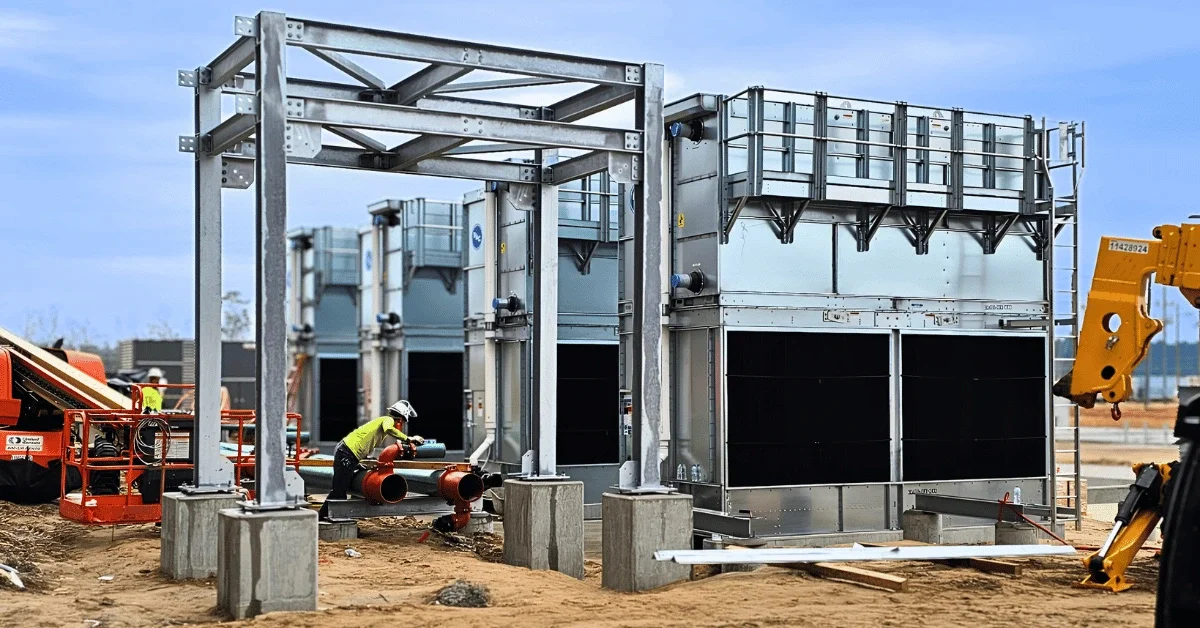
Data center commissioning safety comes down to making sure every crew member knows what's changed. Commissioning is the phase where the installed power and cooling systems are tested prior to handover to operations. On a fast-moving project, it won't wait for construction to be complete.
That overlap creates risk. The electricals may be testing their switchgear while the mechanics are still installing their cooling equipment. A room that was open yesterday could well be restricted today. Equipment that was sitting idle last week could well be live today.
The stakes are going up as the buildout picks up pace. Projects are bigger, schedules are tighter, and more trades are working in the same footprint. The experienced labor is also harder to find.
Rules and permits establish the baseline, but they are not sufficient to keep up with changing site conditions. Safe outcomes depend on clear handoffs, verifiable competency, and controlled access. Each protects crews during the most dynamic phase of the project, and each also affects how the facility will operate once construction is complete.
Why Data Center Commissioning Safety Starts Before Energization
Commissioning is about putting energy into mission-critical systems while people are still working around them. Before any switchgear testing or energizing takes place, every affected crew member needs to know the status of the equipment and which areas have become newly restricted.
Recent Occupational Health & Safety guidance actually refers to this as a handover issue. The work moves from installation through to commissioning and then into operations. Each handover can leave the teams working from out-of-date or incomplete information. The testing one team has done may have altered the precautions the other teams must take.
Planning must anticipate those transitions as they're going to happen. Each handoff must confirm what's changed, who is affected, and whether those people understand the new precautions. There should be a named person responsible for communicating each change, not just a general 'we'll let you know' type of thing.
Consider a room being closed off for electrical testing. The handoff should include who will notify the next shift. It should also confirm that the access restriction remains in place until the testing is complete. A completed permit doesn't compensate for a missed conversation.
The hazards are very real and diverse. There's the obvious risk of electrical shock and burns during testing. There's also the risk of injury from moving plant and falling materials. On a busy site, those risks will co-exist in the same rooms and corridors. Mechanical and electrical work will be happening on the same day in many instances.
Qualified Crews in a Tight Labor Market
Clear handoffs only work if the people you're handing them off to are actually qualified to do the job. That qualification threshold is becoming increasingly difficult to meet. In September 2026, an Associated General Contractors of America survey found 50% of contractors said their candidates lacked the requisite skills, certifications, and/or licenses.
Standards are raising the bar. The 2027 edition of NFPA 70E reinforces the requirement for documented electrical safety training. It also makes it clear that a worker can be qualified for some equipment and tasks and not for others. General qualification is no longer sufficient. You have to be qualified for the specific piece of equipment and the specific task.
For safety personnel, that means verification before assignment. The supervisor has to check the worker's credentials against the equipment and the tasks they’ll be working on that day. Training records must be up to date and readily available in the field.
Training can't stop at onboarding. Commissioning brings in new energy sources, new equipment states, and new access rules. The crew needs task-specific training as the conditions change. Short, frequent updates are needed to keep everyone on the same page about the site’s current state.
Frontline workers provide an additional layer of protection. They're often the first to spot a shift in the barrier or another unstable condition. A simple report via mobile form, photo, or voice note will get that information to the right team in a timely fashion. Ultimately, every report must lead to a visible corrective action.
Controlling Site Access as Crews Cycle Through the Site
Large data center projects have a constant stream of contractors, vendors, and inspectors coming through. Each new arrival changes who can access live equipment and sensitive areas. Access control is now as much a safety issue as it is a security issue.
Security people point out that the number of people with site access increases as the construction gangs go through. That, in turn, increases insider-threat exposure for the owners. The demand for technical physical security roles at data centers has increased dramatically as a result.
On the construction side, the same principle applies to the workers. Access restrictions must keep in step with commissioning. Badging must reflect the current scope of each crew, not the scope of the crew last month. Restricted rooms must have appropriate signage, physical barriers, and someone assigned to enforce the access restrictions.
Shift changes need to be addressed. Info that's with one supervisor can be completely lost when the next crew comes along. Written turnover notes and a brief verbal handover fill the gap. The handover should cover equipment status, any open permits, and any areas newly closed off to entry.
Coordination between the contractors is absolutely key to the success of this effort. Each trade will be answerable to a different foreman or different company. A single site-wide process for access, reporting, and corrective actions ensures everyone is working from the same information. Without that, even the most well-trained crews can walk straight into risks that they've never seen coming.
Data Center Commissioning Safety Carries Into Operations
Data center commissioning safety is not just a phase-specific checklist. The habits you develop during the build carry into operations long after the build crews have demobilized. Clear handovers, verified competency, and disciplined access control become part of how the site is run.
The pressure on these projects is not going to abate any time soon. Construction is still accelerating, schedules are still extremely tight, and skilled labor is still in short supply. That mix leaves very little room for any communication failure. Every missed handover puts a crew at risk.
Owners can mitigate that risk by selecting partners who treat coordination as core work. You want contractors who clearly assign responsibility for every change. You want to see documented, task-specific training and a site-wide process for hazard reporting. You want crews who understand how the mechanical, electrical, and rigging work all intersect.
The buildout drives the pace, and the safety information has to keep up. If you get that right, you protect your people, and you deliver a facility that's ready to go from day one. If you want to bring that same level of discipline to your next mission-critical project, then contact the nationwide industrial contractors at HEMI Systems.