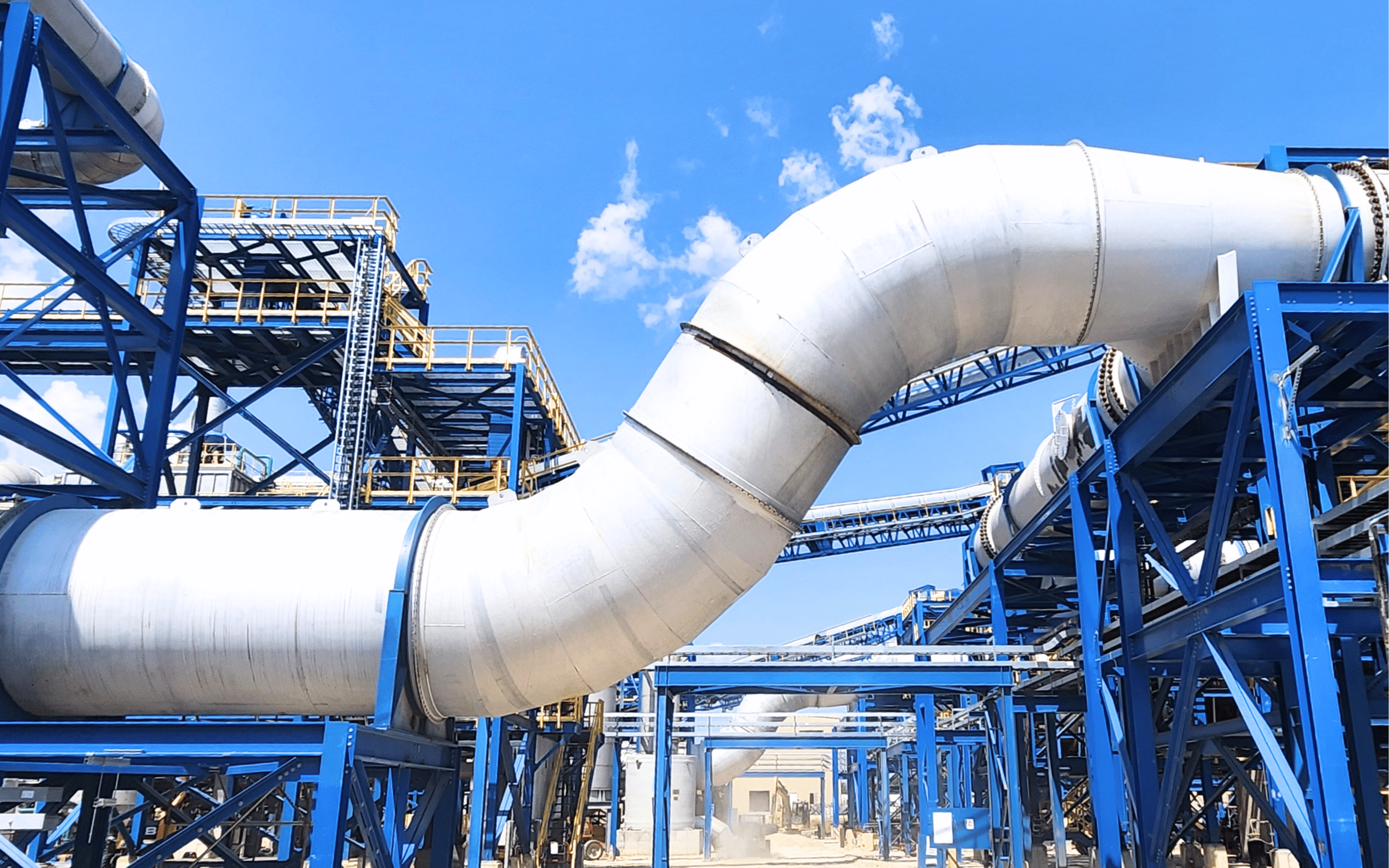
Structural steel fabrication is the backbone of every industrial facility built to last. Manufacturing plants, distribution centers, power plants, and data centers all depend on a structural system built to take punishment. The process shapes raw steel into beams, columns, and assemblies before any piece reaches the jobsite.
Owners and project teams want predictability in cost, schedule, and performance. They want a finished facility ready for business on time and on budget. Steel meets those goals better than any other framing material. It arrives precisely and is ready to install. Fabricators work in controlled conditions while site crews handle excavation and foundation work. By the time the slab is ready, the steel package is ready, too.
Structural Steel Fabrication Offers Specific Quality Standards
Industrial owners want a structural frame that performs in year one and year fifty. Quality assurance starts long before a single beam ships. The American Institute of Steel Construction (AISC) runs the most recognized quality certification program in construction. More than 1,600 U.S. fabricators and erectors currently hold AISC Certification.
Certified shops focus on error prevention rather than error correction. Auditors review procedures, confirm that daily operations match, and return every year for another audit. Owners benefit from streamlined approvals because most authorities accept AISC-certified work without question. Certified fabricators also handle in-house Chapter N inspections, saving the cost of a third-party inspector.
Steel earns this trust because of its performance under stress. Structural steel has identical compressive and tensile strengths. Push it or pull it, and the material holds. Steel also offers the highest strength-to-weight ratio among framing materials. That ratio lets designers span great distances using fewer columns.
Ductility matters too. Steel handles extreme loads without cracking or permanently deforming. A National Institute of Standards and Technology study examined the 1995 Oklahoma City bombing. The study found that a steel frame would have prevented the Murrah Building's progressive collapse and cut damage by 85%. That performance protects people, equipment, and operations inside any industrial facility.
Structural Steel Fabrication Has Predictable Speed and Cost Variables
Schedule certainty is one of the strongest arguments for structural steel fabrication. Project teams can now design, fabricate, and erect a steel building 50% faster than they could a few years ago. Fabricators do most of their work in the shop while site crews handle excavation and foundations in parallel. The steel arrives when the foundation is ready, not weeks later.
Speed translates directly to dollars. Earlier occupancy means earlier revenue. A faster schedule also lowers financing costs and trims general conditions. Seattle's Rainier Square tower saved ten months by choosing steel.
The numbers behind steel pricing work in the owner's favor, too. The structural frame is around 12% of the total project cost. Material accounts for roughly one-third of the frame, and fabrication and erection make up the rest. A 5% jump in raw steel prices moves the total project budget by only about 0.2%. Owners get cost stability that other materials struggle to match.
Smart project teams bring a fabricator into the design phase. Early involvement supports efficient member sizing, fewer reinforcing plates, and shop-friendly connections. Building information modeling (BIM) can further reduce the steel package cost by 10% to 20%. Insurance rates favor steel, too. Carriers typically charge 50% more for concrete buildings and 150% more for wood structures.
Fabricator Expertise Where Industrial Projects Need It Most
Every industrial facility relies on connections. Beams attach to columns. Trusses tie into supports. Bracing handles lateral loads. How those connections come together drives a major share of project cost and quality.
Connection design depends on the fabricator's strengths. In fact, welding labor accounts for about 80% of the cost of a weld job. Bolting labor runs even higher at 85% of a bolted job's cost. Some shops excel at welded connections. Others run high-speed beam lines that make bolting more efficient. The right call depends on equipment, workforce, and project requirements.
In many cases, it’s best to let the fabricator's licensed engineer design most connections. In-house engineers know the shop's strengths and can keep labor hours down. They can value-engineer connections without compromising the engineer of record's design intent. That collaboration shows up in the final cost.
Shop welding consistently outperforms field welding. Field welds run roughly 40% more expensive and 35% less efficient—weather, joint access, and the welder's position all factor in. Pushing more work into the shop also improves safety. OSHA's steel erection standard covers industrial structures. This includes mills, power plants, chemical process facilities, conveyor systems, and hi-bay buildings. A certified fabricator's quality system supports those federal safety requirements from day one.
The Bottom Line for Industrial Facility Owners
Industrial facilities run on reliability. They need structures that arrive on schedule, install safely, and perform for decades. Structural steel fabrication delivers all three. Certified shops produce precise components in controlled conditions. Engineers and fabricators collaborate early to size members, plan connections, and eliminate inefficiencies from the design.
The benefits add up across the life of the building. Faster erection means earlier revenue. Predictable material costs protect the project budget. Thus, lower insurance premiums and a century-long service life round out the value. When a hurricane, fire, or seismic event arrives, steel's ductility and strength help operations return to normal quickly.
Choosing the right fabrication partner matters as much as choosing steel itself. Look for AISC certification, a strong track record in industrial work, and a team willing to engage in the design process. Ask about in-house engineering, quality procedures, and the shop's connection preferences. The right answers translate to a smoother build and a stronger structure.
Ready to start your next industrial project with a fabrication partner who brings precision and experience to every weld? Contact the structural steel fabrication team at HEMI Systems today.